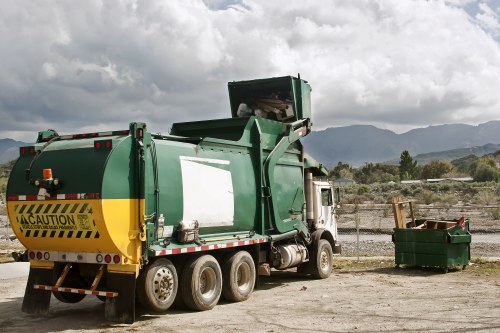
Skip Hire Yeading - Health and Safety Policy
Introduction: This Health and Safety policy sets out the approach that the Skip Hire Yeading operation adopts to manage risks associated with skip hire, rubbish collection and waste removal services. The policy applies to all staff, contractors and third parties engaged in skip delivery, collection, on-site loading and transfer activities. Our objective is to protect people, property and the environment by applying robust controls, safe systems of work and ongoing monitoring.

Scope and Objectives
The policy covers all aspects of our skip hire services including delivery and siting of containers, customer site operations, vehicle movements, manual handling during rubbish removal, segregation of waste and handling of hazardous materials. It aims to ensure compliance with statutory duties and industry best practice while maintaining clear accountability. Emphasis is placed on hazard identification, risk assessment and implementation of control measures that minimise the potential for incidents.Responsibilities and Leadership
The senior management team retains overall accountability for health and safety performance across the skip hire company. Operational managers and supervisors have direct responsibility for ensuring that safe working practices are followed during every stage of the skip hire lifecycle. Employees are required to take reasonable care for their own safety and that of others, report hazards promptly, and participate in training. Every individual must understand the risks associated with rubbish removal and contribute to a safe workplace. Risk assessment and safe systems of work are central to our approach. Before any skip is placed, a site assessment must be completed that addresses underground services, pavement stability, traffic management, and public access. Permits and approvals are checked, and a written method statement is provided for complex or high-risk deployments. Routine checks and pre-use inspections of handling equipment, lifting gear and vehicles are mandatory to prevent faults that could lead to injury or environmental harm.
Work tasks are planned to reduce manual handling and to use mechanical aids where feasible. Staff receive training in safe lifting techniques, correct use of tools and PPE, and the handling of bulky or awkward items encountered during rubbish clearance. The company enforces the use of appropriate PPE such as hi-vis clothing, gloves, safety boots and eye protection when required, and ensures PPE is well maintained.
Traffic management and vehicle safety are key elements of our operational control. Drivers involved in skip hire delivery and collection are required to follow safe driving practices, perform vehicle checks, and use appointed unloading and loading zones. Reversing procedures, use of banksmen, and safe coupling/uncoupling of skip lorries are governed by clear instructions to avoid collisions and incidents. Records of driver competency and vehicle maintenance are kept to support continuous improvement.
Environmental controls are embedded in our rubbish removal services. Waste segregation at source, correct classification of materials and secure containment reduce the risk of pollution and cross-contamination. Special procedures govern the handling and disposal of hazardous wastes such as asbestos, solvents or contaminated soils; only authorised personnel and licensed carriers undertake these tasks to ensure safety and regulatory compliance.
 Emergency preparedness and incident management are essential. The company has procedures for injury reporting, spill response, fire evacuation and incident investigation. First aid provisions are available and trained responders are identified on each shift. Incident records are reviewed to identify root causes and lessons learned; corrective actions are implemented promptly to prevent recurrence.
The policy also covers contractor control and site coordination. All subcontractors engaged by the skip hire operation must provide evidence of safe practices and insurance, and must integrate with our site safety arrangements. Pre-start briefings and joint risk assessments are conducted for multi-party sites to make sure that responsibilities are clear and that rubbish collection activities do not endanger members of the public or other workers.
Monitoring, performance measurement and continual improvement are achieved by regular audits, workplace inspections and analysis of key performance indicators such as incident frequency, near-miss reports and equipment defect rates. Senior management reviews safety performance periodically to ensure the policy remains effective and relevant to evolving operational risks. Corrective and preventive actions are tracked until closed.
Training and competence development form a cornerstone of our safety culture. Induction training, job-specific instruction and refreshers are provided to all staff. Records of training are maintained and assessments of competence are conducted for high-risk tasks. Competent employees are empowered to stop work if they identify unsafe conditions and to escalate concerns without fear of reprisal.
Health and wellbeing are also considered; the organisation promotes safe working hours, takes measures to minimise manual handling strain and supports access to occupational health services where needed. Measures to control exposure to dust, noise and vibration during bulky rubbish clearance help protect workers from long-term harm.
In summary, this policy reflects our commitment as a responsible skip hire and rubbish removal provider to maintain a safe, healthy and environmentally responsible operation. It is supported by procedures, training, supervision and review mechanisms that align with recognised standards for waste collection services.
Policy review: This Health and Safety policy is reviewed at regular intervals or following significant changes in activities, equipment or regulation to ensure it remains current and effective for all skip hire services and waste management operations.